FILMAGEN http://filmagen.com.ar Design & Web Communications Sat, 21 Apr 2018 14:58:23 +0000 es-ES hourly 1 “Logo Refresh”: ¿Es necesario rediseñar su logo? http://filmagen.com.ar/logo-refresh-es-necesario-redisenar-su-logo-2/ Sat, 19 Aug 2017 13:02:25 +0000 http://filmagen.com.ar/?p=34823 The post “Logo Refresh”: ¿Es necesario rediseñar su logo? appeared first on FILMAGEN.

]]>

“Logo Refresh”: ¿Es necesario rediseñar su logo?

A medida que una empresa crece y evoluciona, ¿por qué su logotipo debe quedar inamovible? Todo lo contrario: debe reflejar la misma evolución, acorde a su propia transformación y los nuevos tiempos.

Es un hecho: un logotipo antiguo representa a una empresa antigua; y eso no es precisamente lo que queremos proyectar, en tiempos donde los clientes nos demandan constante renovación. Y en época de vorágine cibernética, necesitamos adaptarnos a ella. ¿Pero hace falta uno nuevo? Lo más probable es que baste con tan sólo un ligero “refresh”.

Los líderes ya lo hacen… y su competencia también!
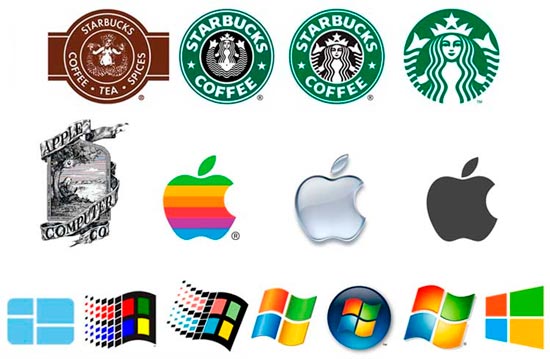
evolucion logos famosos
Quizás ni nos dimos cuenta, pero las empresas líderes constantemente retocan sus logos, de acuerdo a las nuevas tendencias de diseño y comunicación.  En otra época estuvieron de moda los logotipos complicados, con muchos elementos, sombras, ilustraciones, reflejos, tipos de letra…. y paremos de contar.
Pero el minimalismo llegó hace ya algunos años para quedarse, y transformó todo: “Menos en Más” dice, y eso también aplica a la comunicación de las empresas.  En una sociedad invadida de estímulos y mensajes de toda naturaleza, para alcanzar al público necesitamos un mensaje claro, rápido y muy directo.

El poder supremo de la imagen

Lo mismo pasa con las imágenes (y el logo): debe transmitir la personalidad y su mensaje en tan solo un segundo, para causar impacto y detener a quien la ve.  En una sociedad dominada por lectores perezosos, la imagen es quizás lo único que verán cuando hojeen nuestro folleto o visiten nuestra página web.  Seguramente más de una vez le habrán preguntado por cosas que están ya allí, explicadas en detalle, pero que muy pocos llegan a leer.

El logo, arriba, destacado, será entonces el encargado de impresionar, cautivar, invitar y transmitir la personalidad de la empresa, qué hace, cómo es, cuál es su estilo.  Difícilmente queramos que nos perciban como una empresa antigua, confusa, aburrida, y mucho menos del montón.

¿Cómo saber si su logotipo necesita un cambio?

– Se ve anticuado

– Es demasiado complejo

– No refleja la personalidad de la empresa

– No representa a nuevas líneas de productos o servicios

– Los colores no son los adecuados

– Es muy similar a otro

– No tiene versiones que se adapten bien a todos los medios

Usted es y debe lucir único

No sólo usted debe ser único, sino parecerlo.  Si su logo carece de originalidad; o peor aún, se parece demasiado a otros logotipos, corre el riesgo de que lo confundan con otros.  Internet está plagada de servicios de logotipos que ofrecen diseños por tan solo 5 dólares; o plantillas en la que a un logo cualquiera le ponen su nombre (y luego el de otro cliente, y luego el de otro…).  Muchas veces empresas u emprendedores con pocos recursos o ingenuos, compran logotipos “a medida” que fueron tomados y adaptados de bancos de imágenes. Seamos honestos, ¿cuánto tiempo le puede tomar a un verdadero profesional hacer un logotipo personalizado? Si su logotipo es completamente original, vamos bien!

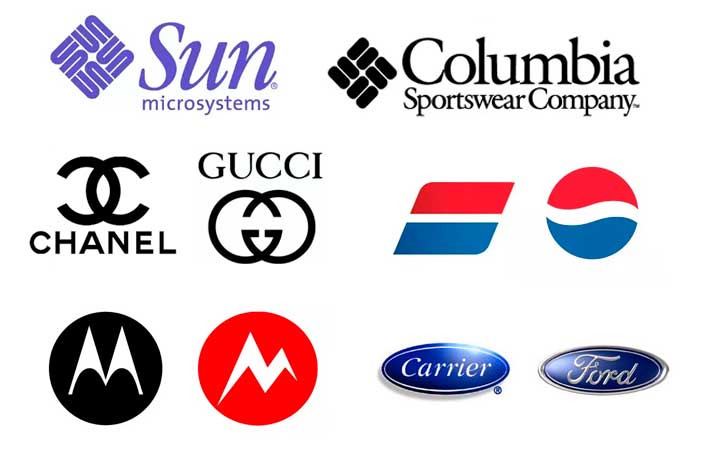
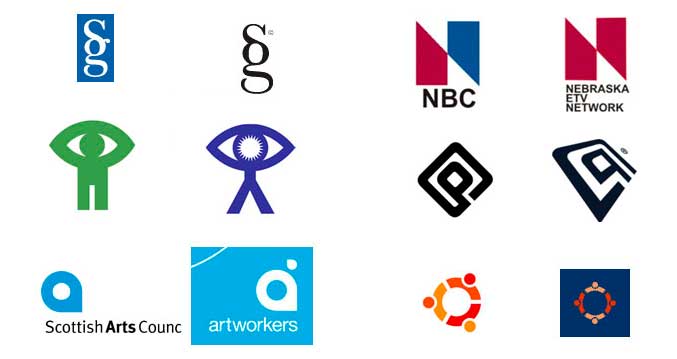
logos similares

Ni siquiera las empresas líderes se salvan de la clonación

logos similares

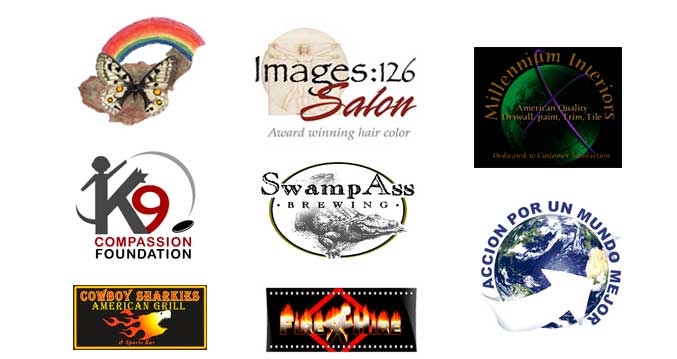
No es raro encontrar logos parecidos; pero a veces, la similud es sospechosamente extraordinaria

Unico… además de profesional

Contratar al diseñador indicado es una inversión, no un gasto. Su imagen lo vale y lo acompañará por muchos años. De acuerdo a su presupuesto podrá elegir a un estudio de diseño o a un diseñador que trabaja por su cuenta (que posiblemente le dedique más tiempo y esfuerzo); pero en lo posible, huya de los aficionados que no conocen las reglas más elementales de diseño y comunicación.

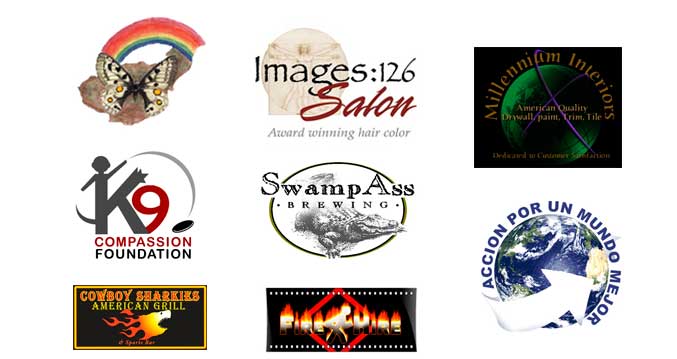
logos similares

Un logo no profesional puede transmitir la imagen no indicada

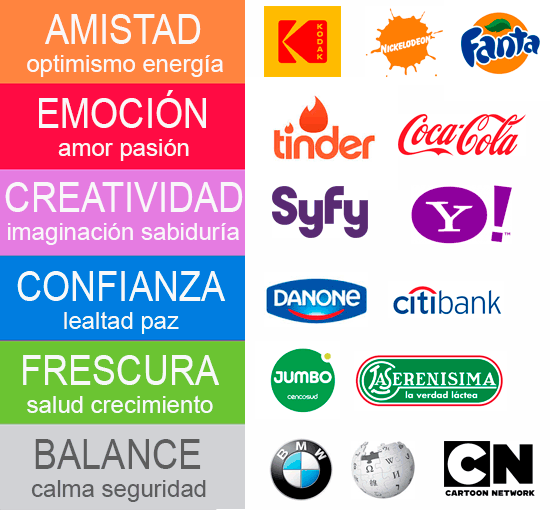
emociones colores logos

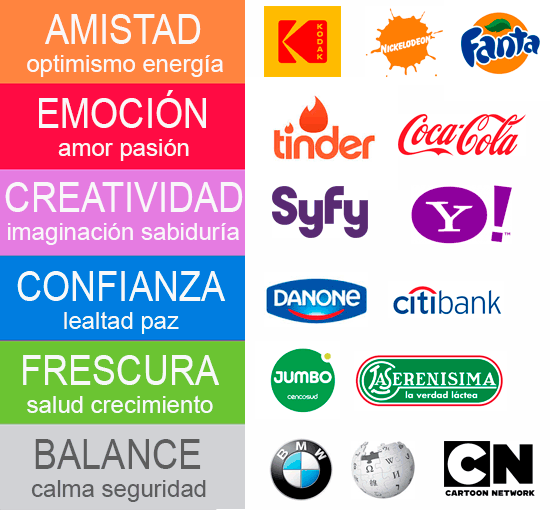
La percepción de los colores

Más allá de las preferencias y gustos personales, cada color transmite una sensación (amarillo-alegría, azul-tristeza, celeste-esperanza, rojo-pasión); y cada uno de ellos está socialmente asociado a diferentes conceptos (verde-conservación, oro-riqueza, azul-finanzas, rosado-femineidad, negro-elegancia).

Entonces es mejor cerciorarse de que los tonos de su logo refuercen su mensaje y representen inequívocamente a su producto o servicio.

Del papel a la pantalla

Hace ya algunos años, el uso de los logotipos se restringía casi exclusivamente a la papelería comercial, y simplemente tenía que lucir bien impreso.  Hoy en día, las comunicaciones se trasladaron a medios digitales y audiovisuales, por lo cual el logo debe verse adaptarse y verse bien, tanto en un cartel de la vía pública como en un celular… y en una tablet, tanto en horizontal como vertical…. y una laptop, pc, lcd, etc.  Usted precisará de versiones a full color, blanco y negro, grises y en negativo (en blanco para fondos de color), con calidad suficiente para que impriman bien y no se vean pixeladas al cambiar el tamaño de pantallas. Pero no todo logo va a lucir siempre bien!

Tiempos de “lifting” o “refresh”

El rediseño de logotipo o “logo refresh”, consiste en hacer retoques o pequeños cambios al logotipo actual, para mejorarlo o modernizarlo, pero sin cambiar su esencia, de modo que siga siendo reconocible por los clientes.  Se trata de rejuvenecer la imagen para transmitir que la empresa se va adaptando a los nuevos tiempos, las nuevas tendencias; y quizás incluso a nuevos mercados.

logo refresh rediseño
Pero de la misma forma que un cambio radical en nuestro look personal puede ser catastrófico en manos de un mal peluquero; lo mismo ocurre con el logotipo.  Modificarlo a la ligera y en manos poco profesionales, puede ser un gravísimo error.  Lo barato puede salir costosísimo, si llegamos a transmitir una imagen descuidada, improvisada, confusa, o tan radical (que nuestro público ya deja de reconocer); y lamentablemente eso se transforma en pérdida de clientes que tanto costó conseguir.

La intemporalidad siempre vigente

Hace poco tiempo se puso de moda lo retro; y quizás piense que su logo volvió a ponerse de moda. Pero no, las modas vuelven, con variaciones.  Y ese retro es un retro renovado, que no es precisamente idéntico a su retro.

Es posible que su logotipo permanezca vigente; precisamente esa es una de las características de un buen logo (que sean intemporales).  Pero si su logo ya tiene más de 15 años, quizás necesite un “lifting” o algún ligero retoque.

conclusión Así como un logotipo debe transmitir los valores y estilo de una empresa, es fundamental proyectar su vigencia. Por ello puede ser necesario retocarlo de vez es cuando para adaptarlo a su evolución y los nuevos tiempos. Pero se pone mucho en riesgo si no es tratado en forma correcta y profesional, por lo cual es imprescindible su correcto desarrollo e cuidadosa implementación.

Otros artículos relacionados


¿Cree que esto puede ser útil para su propio emprendimiento?

Revise algunos casos para ver cómo podría aplicarlo
¡Chequea cómo!

The post “Logo Refresh”: ¿Es necesario rediseñar su logo? appeared first on FILMAGEN.

]]>
¿Cómo invertir mejor su dinero al desarrollar un logo? (en inglés) http://filmagen.com.ar/como-invertir-mejor-su-dinero-al-desarrollar-un-logo-en-ingles/ Sat, 19 Aug 2017 12:46:04 +0000 http://filmagen.com.ar/?p=34803 The post ¿Cómo invertir mejor su dinero al desarrollar un logo? (en inglés) appeared first on FILMAGEN.

]]>

How to best spend your budget

when commissioning a site or logo

When you have a small budget and/or are in an initial phase of your business where you might change things as you move on, it is of essence that you review what are your best options, and do a wise investment. A website and a logo are pricey long term investments in your company and you better give them the attention they deserve.

So what to do when your budget is smaller than your needs?

freebie

Websites

A website is a powerful tool to grow your business. While today you will find a myriad of options to build your site, like DIY templates, it’s better that you enlist the help of a professional that takes the time to sit with you to talk about what would you like to see happening, what is important to your customers, what are the results that matter. In that fashion your site will look great and serve your company goals.
1) Do your homework
This one is valid even when you have a large budget, actually. If you already have a site and want a new one take the time to assess what is what you have so far, what results has it delivered as compared to what results you expect/need. In that fashion you will identify what is working and what not, and avoid making unnecessary changes. It can be that your site is ok, but the home needs some tweaking, the texts need some optimization or reduction, or elements need to be reorganized. If you are shopping for your first site make sure your message and what you can do for your clients is clear and put your time and energy into crafting that message, instead of writing endless pages for the website. Having a site that looks great is a big helper, but if your visitors land on your page and do not see what they are looking for (like the confirmation they are in the right place) they will leave your gorgeous-looking site to continue their search elsewhere. Making text and design complement each other will take you to great lengths. Bear this in mind and if possible hire qualified professionals to help you with your website, and do much more than adding pictures and text to a template. A simple site that tells people about your company and your products will be more than enough when you are starting, but all elements should have a reason to be there and a function.
3) Speak to your audience
When beginning your website project, start with what’s most important: your clients and prospects. It is not about you/ your product, but about the benefit your clients are looking for. And your site should address this expectation from the beginning, hence why every element whether graphic or copy counts.
2) Review your content
One thing most often overlooked in launching a new website is the copy. Copy is so very important but that being said, less is more with the web. Visitors give a glimpse to your page and if there is something that catches their eye then they will stay a bit longer. But essentially they skim the content. Professionally written content helps to grab the attention and generate more clicks within your site. If you can’t afford professional help live by this rule: use discretion with your words and pretend that each word costs money to use.
4) Realise that you do not need all at once
This is especially important for sites on a budget. It’s better when you settle for less pages than sacrificing on the quality of your site (look & feel, content). Make sure your site is built with growth in mind. The design should allow for additional pages as needed. Carefully chose the person or company that will build your site, as in addition to a good site you should be looking towards having a long term relationship with the designer, as your site will need updates or changes on a regular basis. At bridge2MORE we created the Kick Starter Packages combining marketing support and website that allow you to get quickly online, with a very reasonable investment. These combos are ideal for starters, or when you need to get quickly online, or wish to test ideas before launching big.
freebie

Logos

A logo is to a business what a face is to you. It is an essential part of creating a visual presentation of your company. Do not take shortcuts trying to save time or money or both. Trouble is, most ‘cookie cutter’ solutions will turn out to be neither inexpensive nor fast, and may cause a ton of headaches down the road – especially when your company starts to become more high-profile. Logos require a great amount of hand- and thought work. It is a labor of art not exempt of science. Even small changes in a logo should be weighed over carefully. And that knowledge is what you are paying for in most of the cases. This is the reason why logos might eat a big chunk of your budget. However there are some ways around the investment in a logo, without sacrificing quality.
1) Do your homework
When starting a business there is so much to define and have clear before we get to the elements that form the image of your company. Take the time to write a thorough briefing your designer can use to develop your logo. Gathering as much information as possible in advance before briefing a designer not only helps with initial discussions, it also assists with potential negotiations later if the designer has strayed off the brief.The better the information, the less corrections it will need before you come to the final version. Think of your ideal clients, what defines them and also their profile (gender, age, occupation, hobbies etc), what you want your logo to communicate: your brand is it luxurious, affordable? How will the logo be used (online, print, in small formats, etc). These are all elements of a good briefing.
3) Keep it simple
The design can be as simple as just a text logo with a different color letter in it to give it uniqueness, or a logo with a symbol to represent the company. Making it original and professional is what is important. Elements such as smooth curves and smooth text, all add to the quality of the logo. Having jagged edges or unreadable text can really hurt the quality of the logo which in turn can be negative to the image of the business. Beware of some options that ask for a couple of dollars for an “original” as these usually are of low quality and certainly not original. Professional designers deliver high quality logos, created from scratch that look well in every device.  In addition they can deliver a full logo suite, which is a folder with all the variations of the logo: black & white, color, for print and for digital uses, as well as large formats.
2) Do not rely on trends
Trends (whether swooshes, glows or bevels) come and go and ultimately turn into clichés. A well-designed logo should be timeless.
4) Think outside the box
If you are on a small budget look for variations of your logo that require less work hours on behalf of the designer. As mentioned earlier, a thorough briefing will get you far and save you money otherwise spent on revisions. A logo that is typographic in nature is certainly much more affordable that one including a sign. If you are an entrepreneur your logo could be your signature, adequately reworked by a designer. In any case, whether signature or typographic logo, aspects like colors, font type, dimensions and high quality files of different formats of your logo, should be done by a professional. Here a little secret: when professional designers have the task of designing a logo, they usually present the client with several variations to zoom into what the client really likes, and so they narrow down the choices. What do you think they do with the logos they did not use? Some leave them to gather dust, others offer them at a discounted price. These discarded logos do not necessarily have a resemblance with the final logo chosen by the client. At bridge2MORE we offer these logos as Logos2Go, and clients can ask for a different color combination, add their name and other small changes at a really affordable price. So remember when purchasing a logo make it unique to your business, keep it clean,clear and professional!
Website and logo are a vital part of your business communication and tool to lock in potential clients. You can have a well designed logo and a site that not only looks good, but does what it has to do, on a limited budget when you know what to look for.

Feel this could work for your own project?

Check our business case to see how it can be implemented!
Check it!

The post ¿Cómo invertir mejor su dinero al desarrollar un logo? (en inglés) appeared first on FILMAGEN.

]]>
La guía útil para crear recursos gratis para su audiencia (en inglés) http://filmagen.com.ar/34800/ Sat, 19 Aug 2017 12:40:21 +0000 http://filmagen.com.ar/?p=34800 The post La guía útil para crear recursos gratis para su audiencia (en inglés) appeared first on FILMAGEN.

]]>

Choose your Freebie

The smart guide to create a free resource for your audience

The freebie is a popular and enduring method of marketing and can come in any form: samples, trials, downloads, coupons, discounts etc. From large conglomerates such as Unilever, Kraft, Procter & Gamble to small business, all benefit from giving samples or trials away for free. Find out how to create yours.

freebie

Why are free resources so popular?

Getting a customer to even try a product or service is the biggest part of the battle — which explains why companies are willing to give away free stuff just to get people to consider a product without putting up a price barrier. In terms of reaching consumers, free samples or trials are often much more powerful, and much cheaper than traditional advertising.

In brief: Your free gift is the key element that turns (website) visitors to subscribers, and helps you to connect with (potential) customers.

On the other hand, giving free bribes to have people opting in your mailing list has become such a popular practice, that visitors have developed a BS radar and they can tell from the distance if yours is worth their time, and even more so, their email address.

freebie

What makes a good freebie?

A good freebie has foremost one important element: value for your audience. And that’s why you should focus less on “free” and more on the value of what you’re giving away. Value starts with offering something that your ideal customer really wants.

A valuable freebie should provide a small but desirable solution to a problem your customers have.

When your freebie is a book, article, webinar or podcast, Stella Orange,  founder & creative director of StellaOrange.com suggests the following outline :

Intro Welcome + what’s the problemPaint a picture of how it’s showing up in their lives, and how it feelsReassure them there is a solution. That’s why this guide is aboutThis with context, might be a half page to a page
Context Here you can explain why the problem persistsWhat’s the cost of not solving the problemWhat gets to happen AFTER they solve it?You might share a bit of YOUR story and how you came to “crack” the code on this stuff
Your 3-5 teaching points Teaching pointPaint a picture of how it’s showing up in their daily livesReframe or give insightGive a simple exercise they can do right now to start to changeThis is where most of your content is. Maybe 3-5 pages
Wrap up + Call to action “Now that you’ve got that solved, another problem crops up”Or: “Maybe you want support as you do this”

Where do you find the problems that your audience is struggling with?

HINT: it’s got to be an urgent problem that they KNOW they have.

If you already have a fair-sized audience, you can run a simple survey. Instead, if you are starting out or wish to explore a different niche than your usual one, leverage on tools brought to you by the courtesy of Internet:

  • Analyze popular blogs. Use tools such as Social Crawlytics, Open Site Explorer and SEMrush to figure out what’s popular on other blogs in the same space. What problems do those popular posts tackle?
  • Use Quora, Reddit and Digg. What questions, topics and links are popular on these sites within your niche? What problems do people struggle with that have no simple answers?
  • Study Amazon book reviews. What sort of comments are people leaving in their reviews of the most popular books on your subject on Amazon? Pay particular attention to negative reviews – what problems have the books failed to solve?
freebie

Boost Blog Traffic’s author John Morrow, gives the following tip: Once you have identified some potential problems, write them out using the goal-obstacle template: I want [goal], but [obstacle]. For instance:

  • I want to eat healthier, but it seems too complicated.
  • I want to start a blog, but I’m not sure which topic to choose.
  • I want to get more freelance clients, but I don’t know where to start.

Then think what type of resource could you create that will help your audience to overcome the obstacle: a check-list, an e-book, a podcast, a cheat-sheet, blueprint etc. Remember, you’re not trying to solve the whole problem, just help the reader feel like they’re a little closer to achieving their goal.

freebie

Come up with a sexy title

And finally, don’t forget to give your checklist a powerful headline  so potential subscribers will happily give you their email address to get their hands on it. Here are some tried -and true- patterns to get you started:

  • How to [list 1 hot RESULT they want]
  • The 4 Mistakes [your target market] Makes (and the Fix)
  • The Smart ______’s Guide to [something they want].
  • The 5 step plan to [result]
  • The step by step guide to _______.
  • How to [result] WITHOUT [something they don’t want]
  • The smart guide to create a free resource 😉

And last, but not least, craft a juicy opt-in for your website!

freebie

Freebies in action

Here a practical case where you can see how a freebie was used to create interest in a high-end course. We transformed a simple list of items from a post into an attractive pdf to turn visitors into subscribers and lead them to register for a course.

Presenting your prospects a free resource that has actual value to them is vital. Whether your freebie is a book, podcast, sample, trial, checklist or other form of free promo, make sure you do the effort to find what kind of issues your target is dealing with for which they have not found a solution, a provide them with a taste of your solution.

Feel this could work for your own project?

Check our business case to see how it can be implemented!

Check it!

The post La guía útil para crear recursos gratis para su audiencia (en inglés) appeared first on FILMAGEN.

]]>
Landing pages: más puertas para acceder a su sitio web http://filmagen.com.ar/landing-pages-mas-puertas-para-acceder-a-su-sitio-web/ Sat, 19 Aug 2017 12:35:51 +0000 http://filmagen.com.ar/?p=34796 The post Landing pages: más puertas para acceder a su sitio web appeared first on FILMAGEN.

]]>

Landing pages

Más puertas de entrada en su sitio para atraer más clientes

Si se trata de atraer nuevos clientes, promover un producto o servicio específico o recopilar datos de contacto de su audiencia, las landing pages son donde las ideas se convierten en acción. Si bien su página principal o homepage es la que da la bienvenida a todos los clientes que lo visitan, presentando quién es usted y todos sus productos y servicios; las puertas accesorias o landing pages, constituyen pasadizos, no tan secretos, que permiten a los clientes llegar rápidamente a lo que están buscando.

Básicamente cualquier página de su sitio a la que dirija al público, diferente de su página principal, es considerada una landing page (literalmente, páginas de aterrizaje). Independientemente si se trata de un anuncio pago en Google Adwords, un banner, una publicación en Facebook o de un mensaje de correo electrónico, la puerta por la que entra el visitante después del click, tiene un enorme potencial para convertirlo en cliente. La pregunta es entonces: ¿qué bebe incluir una landing page para ser efectiva?

10 elementos esenciales de una landing page

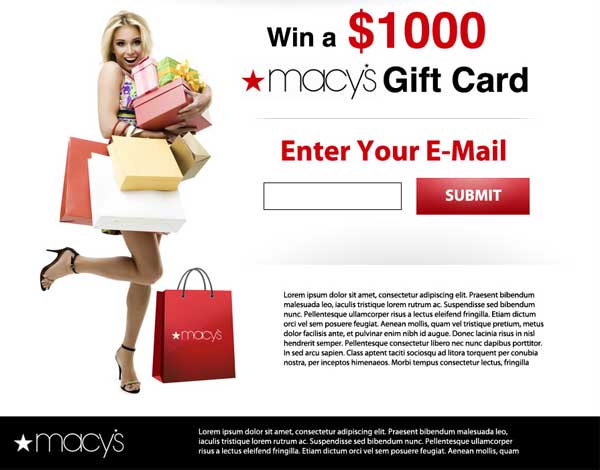
Para transformar visitantes en clientes potenciales, idealmente una landing page contiene:

    ✅

  1. Un objetivo muy claro y específico: absolutamente TODOS los elementos deben apuntar a ese único objetivo, bien sea que hagan click en la oferta, que completen un formulario o que llamen inmediatamente a hacer un pedido.
  2. ✅Una fuente externa que promociona la landing page: un banner publicado en un diario o el mismo sitio, un aviso popup (que deben ser usados con mucho cuidado, pues generan mucho rechazo) o quizás un mail.
  3. Una imagen, foto o video atractivo, que llame la atención y cautive al visitante para que siga leyendo.
  4. Un “anzuelo”, que puede ser una oferta, un cupón de descuento o un regalo promocional, protagonista absoluto de la página. Chequee luego nuestra publicación sobre cómo seleccionar un anzuelo eficaz.).
  5. Información específica, pero muy escueta, de lo que recibirá el visitante, preferiblemente en forma esquemática (bullets: 1) 2) 3)….).  NO se trata de describir el producto o servicio, sino cuál es el beneficio que recibirá el visitante.
  6. Una llamada inmediata a la acción (CTA – call to action), generalmente un botón o formulario que inequívocamente permita al visitante acceder al “anzuelo”, que debe aparecer al principio y al final de la página (y quizás también al medio, dependiendo de su longitud).
  7. Un formulario, si la compra no es inmediata, para que los visitantes proporcionen sus datos a cambio de esa oferta, que llegará luego por mail o se accederá sólo tras presionar el botón.
  8. Un reforzador de confianza: Posiblemente testimonios de usuarios o clientes satisfechos, y alguna garantía de devolución de dinero, certificados de calidad o experticia.
  9. Un sistema de recolección de la información suministrada, para armar una base de datos con contactos (clientes potenciales) a la cuales contactar eventualmente (tipo Namecheap o Aweber, con servicio gratuito hasta ciertos límites).
  10. Un sistema de medición de resultados, que puede ser Google Analytics, o el propio del sistema del punto anterior (que tienen sus propias mediciones.

Como punto extra, ya entrando a nivel experto: Idealmente debería incorporar acciones específicas de SEO (optimización en buscadores), con palabras clave que posicionen a la página en los resultados de páginas tipo Google, Bing o Yahoo.

Los 3 NO: ¿Qué no debería incluir una landing page?

  1. Información irrelevante que desvíe al visitante en su camino al CTA: botón, formulario o teléfono.  La página debe conducir muy rápidamente a la acción.
  2. Imágenes y animaciones que distraigan al visitante. En las landing pages, menos es más.
  3. Vínculos que lleven a otras páginas del sitio. Incluso debería prescindir del menú de navegación, barra lateral y pie de página.
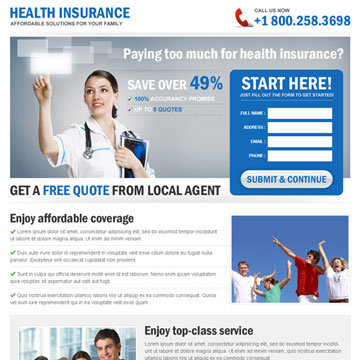
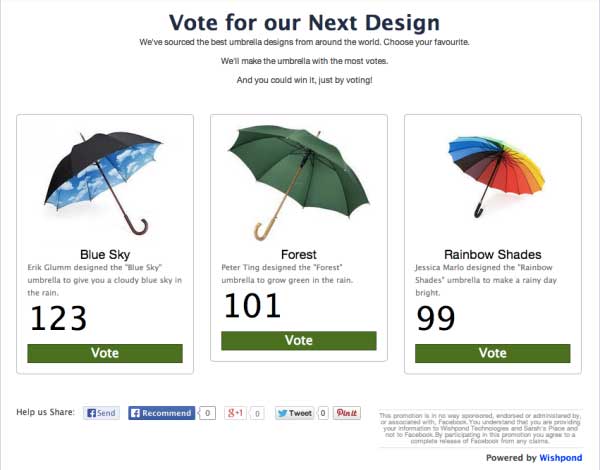
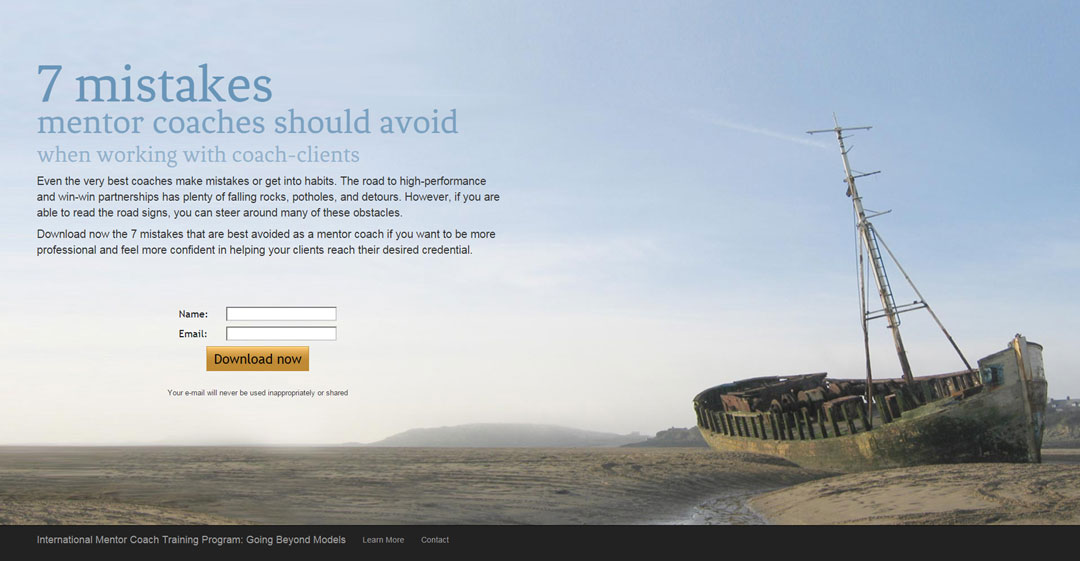
health insurance landing page

Los 5 beneficios principales de las landing pages

/

Exponer mejor un producto o servicio específico, ya que lo convierte en protagonista solitario.

,

Exponencialmente ampliar las oportunidades de aparecer en los resultdos de los buscadores.

&

Generar mayores tasas de conversión porque su visitante se mantiene enfocado en su objetivo.

/

Exponer mejor un producto o servicio específico, ya que lo convierte en protagonista solitario.

,

Exponencialmente ampliar las oportunidades de aparecer en los resultdos de los buscadores.

Exponer mejor un producto o servicio específico

Al poner el foco, lo convierte en protagonista solitario. Las landing pages apuntan a un segmento de su audiencia acotado, promueven un producto o servicio en particular y hacen que sus visitantes tomen una acción específica.

Ajustar productos y servicios

Las landing pages le permitiran incluso desarrollar los productos y servicios que su público prefiere o necesita, a través del análisis de sus visitantes o a través de encuestas.

Fomentar una relación en el tiempo

Más allá de lograr una venta inmediata, las landing pages pueden ayudar a crear y fomentar una relación con sus clientes.  Muchos visitantes de su sitio web no estarán aún dispuestos a comprar; por lo tanto, el objetivo es asegurarse de que se inscriban en su lista antes de abandonar su sitio. De esa manera usted podrá continuar nutriendo la relación, bien sea a través de correo electrónico, de sus redes sociales o idealmente a través de un newsletter.

Las landing pages pueden así utilizarse para permitir a los visitantes descargar inmediatamente, o solicitar recibir sus ofertas (cupones, libros electrónicos, informes, webinars, regalos, etc.), con la promesa de poder volver a contactarlos eventualmente.

Con el uso adecuado de landing pages, su sitio con cuentas puertas accesorias que permiten a los visitantes tomar acciones inmediatas y concretas, sin distracciones y absolutamente enfocados.

¿Quiere crear su propia landing page?

Check our business case to see how it can be implemented!

Contáctenos

The post Landing pages: más puertas para acceder a su sitio web appeared first on FILMAGEN.

]]>
“Logo Refresh”: ¿Es necesario rediseñar su logo http://filmagen.com.ar/logo-refresh-rediseno-logo/ Sat, 01 Apr 2017 15:59:14 +0000 http://filmagen.com.ar/?p=3296 The post “Logo Refresh”: ¿Es necesario rediseñar su logo appeared first on FILMAGEN.

]]>

“Logo Refresh”: ¿Es necesario rediseñar su logo?

A medida que una empresa crece y evoluciona, ¿por qué su logotipo debe quedar inamovible? Todo lo contrario: debe reflejar la misma evolución, acorde a su propia transformación y los nuevos tiempos.

Es un hecho: un logotipo antiguo representa a una empresa antigua; y eso no es precisamente lo que queremos proyectar, en tiempos donde los clientes nos demandan constante renovación. Y en época de vorágine cibernética, necesitamos adaptarnos a ella. ¿Pero hace falta uno nuevo? Lo más probable es que baste con tan sólo un ligero “refresh”.

Los líderes ya lo hacen… y su competencia también!
evolucion logos famosos
Quizás ni nos dimos cuenta, pero las empresas líderes constantemente retocan sus logos, de acuerdo a las nuevas tendencias de diseño y comunicación.  En otra época estuvieron de moda los logotipos complicados, con muchos elementos, sombras, ilustraciones, reflejos, tipos de letra…. y paremos de contar.
Pero el minimalismo llegó hace ya algunos años para quedarse, y transformó todo: “Menos en Más” dice, y eso también aplica a la comunicación de las empresas.  En una sociedad invadida de estímulos y mensajes de toda naturaleza, para alcanzar al público necesitamos un mensaje claro, rápido y muy directo.

El poder supremo de la imagen

Lo mismo pasa con las imágenes (y el logo): debe transmitir la personalidad y su mensaje en tan solo un segundo, para causar impacto y detener a quien la ve.  En una sociedad dominada por lectores perezosos, la imagen es quizás lo único que verán cuando hojeen nuestro folleto o visiten nuestra página web.  Seguramente más de una vez le habrán preguntado por cosas que están ya allí, explicadas en detalle, pero que muy pocos llegan a leer.

El logo, arriba, destacado, será entonces el encargado de impresionar, cautivar, invitar y transmitir la personalidad de la empresa, qué hace, cómo es, cuál es su estilo.  Difícilmente queramos que nos perciban como una empresa antigua, confusa, aburrida, y mucho menos del montón.

¿Cómo saber si su logotipo necesita un cambio?

– Se ve anticuado

– Es demasiado complejo

– No refleja la personalidad de la empresa

– No representa a nuevas líneas de productos o servicios

– Los colores no son los adecuados

– Es muy similar a otro

– No tiene versiones que se adapten bien a todos los medios

Usted es y debe lucir único

No sólo usted debe ser único, sino parecerlo.  Si su logo carece de originalidad; o peor aún, se parece demasiado a otros logotipos, corre el riesgo de que lo confundan con otros.  Internet está plagada de servicios de logotipos que ofrecen diseños por tan solo 5 dólares; o plantillas en la que a un logo cualquiera le ponen su nombre (y luego el de otro cliente, y luego el de otro…).  Muchas veces empresas u emprendedores con pocos recursos o ingenuos, compran logotipos “a medida” que fueron tomados y adaptados de bancos de imágenes. Seamos honestos, ¿cuánto tiempo le puede tomar a un verdadero profesional hacer un logotipo personalizado? Si su logotipo es completamente original, vamos bien!

logos similares

Ni siquiera las empresas líderes se salvan de la clonación

logos similares

No es raro encontrar logos parecidos; pero a veces, la similud es sospechosamente extraordinaria

Unico… además de profesional

Contratar al diseñador indicado es una inversión, no un gasto. Su imagen lo vale y lo acompañará por muchos años. De acuerdo a su presupuesto podrá elegir a un estudio de diseño o a un diseñador que trabaja por su cuenta (que posiblemente le dedique más tiempo y esfuerzo); pero en lo posible, huya de los aficionados que no conocen las reglas más elementales de diseño y comunicación.

logos similares

Un logo no profesional puede transmitir la imagen no indicada

emociones colores logos

La percepción de los colores

Más allá de las preferencias y gustos personales, cada color transmite una sensación (amarillo-alegría, azul-tristeza, celeste-esperanza, rojo-pasión); y cada uno de ellos está socialmente asociado a diferentes conceptos (verde-conservación, oro-riqueza, azul-finanzas, rosado-femineidad, negro-elegancia).

Entonces es mejor cerciorarse de que los tonos de su logo refuercen su mensaje y representen inequívocamente a su producto o servicio.

Del papel a la pantalla

Hace ya algunos años, el uso de los logotipos se restringía casi exclusivamente a la papelería comercial, y simplemente tenía que lucir bien impreso.  Hoy en día, las comunicaciones se trasladaron a medios digitales y audiovisuales, por lo cual el logo debe verse adaptarse y verse bien, tanto en un cartel de la vía pública como en un celular… y en una tablet, tanto en horizontal como vertical…. y una laptop, pc, lcd, etc.  Usted precisará de versiones a full color, blanco y negro, grises y en negativo (en blanco para fondos de color), con calidad suficiente para que impriman bien y no se vean pixeladas al cambiar el tamaño de pantallas. Pero no todo logo va a lucir siempre bien!

Tiempos de “lifting” o “refresh”

El rediseño de logotipo o “logo refresh”, consiste en hacer retoques o pequeños cambios al logotipo actual, para mejorarlo o modernizarlo, pero sin cambiar su esencia, de modo que siga siendo reconocible por los clientes.  Se trata de rejuvenecer la imagen para transmitir que la empresa se va adaptando a los nuevos tiempos, las nuevas tendencias; y quizás incluso a nuevos mercados.

logo refresh rediseño
Pero de la misma forma que un cambio radical en nuestro look personal puede ser catastrófico en manos de un mal peluquero; lo mismo ocurre con el logotipo.  Modificarlo a la ligera y en manos poco profesionales, puede ser un gravísimo error.  Lo barato puede salir costosísimo, si llegamos a transmitir una imagen descuidada, improvisada, confusa, o tan radical (que nuestro público ya deja de reconocer); y lamentablemente eso se transforma en pérdida de clientes que tanto costó conseguir.

La intemporalidad siempre vigente

Hace poco tiempo se puso de moda lo retro; y quizás piense que su logo volvió a ponerse de moda. Pero no, las modas vuelven, con variaciones.  Y ese retro es un retro renovado, que no es precisamente idéntico a su retro.

Es posible que su logotipo permanezca vigente; precisamente esa es una de las características de un buen logo (que sean intemporales).  Pero si su logo ya tiene más de 15 años, quizás necesite un “lifting” o algún ligero retoque.

conclusión Así como un logotipo debe transmitir los valores y estilo de una empresa, es fundamental proyectar su vigencia. Por ello puede ser necesario retocarlo de vez es cuando para adaptarlo a su evolución y los nuevos tiempos. Pero se pone mucho en riesgo si no es tratado en forma correcta y profesional, por lo cual es imprescindible su correcto desarrollo e cuidadosa implementación.

Otros artículos relacionados


¿Cree que esto puede ser útil para su propio emprendimiento?

Revise algunos casos para ver cómo podría aplicarlo
¡Chequea cómo!

The post “Logo Refresh”: ¿Es necesario rediseñar su logo appeared first on FILMAGEN.

]]>
¿Quién diseñará y construirá su sitio web? http://filmagen.com.ar/who-should-build-your-website/ Wed, 16 Nov 2016 15:21:30 +0000 http://filmagen.com.ar/?p=2485 The post ¿Quién diseñará y construirá su sitio web? appeared first on FILMAGEN.

]]>

Si usted tiene un negocio, usted debe tener un sitio web. Punto. No hay duda. Pero siendo un sitio web tan fundamental para su negocio, ¿cómo asegurarse de que está eligiendo a la persona adecuada para construirlo?

Durante una conversación con un cliente que posee y gestiona un centro de idiomas, surgió este tema. Nuestro cliente se puso en contacto con nosotros para hablar sobre las maneras de hacer crecer su negocio. En algún momento surgió la conveniencia de aprovechar el enorme potencial de internet; y ahí mencionó que hace un par de meses le había encomendado a su sobrina la tarea de hacer un sitio para su empresa. Sin duda, pareciera algo natural, ¿verdad? Después de todo, cuando usted necesita un plomero o un electricista, le pide recomendaciones a algún vecino o amigo. Entonces, ¿por qué no hacer lo mismo en este caso, especialmente si se trata de un pariente cercano, y de paso le damos una mano? Sólo que la mencionada no es una profesional, pero “es muy buena con la computadora”. Lo mismo pasa con aquel vecino que dibuja muy bien, a quien le pudiéramos encargar un logotipo.

Una herramienta para hacer despegar enormes oportunidades

Y aquí viene la cosa. Un sitio web no es algo independiente, sino parte de su estrategia de marketing. Es una herramienta superpoderosa para hacer crecer su negocio. Construir un sitio sin tomar en cuenta esto, no sólo es una pérdida de dinero. Al así hacerlo está descuidando un elemento clave, con un inmenso potencial para alcanzar enormes resultados y llegar más rápido a sus objetivos. Usted necesita comprender claramente cómo el sitio web forma parte del rompecabezas de la estrategia de marketing, y así pueda estar seguro de que la estructura del mismo y su contenido trabajen para apoyar dicha estrategia. Pero muchos empresarios se apresuran contratando a quien tienen más a mano, pues sólo necesitan estar presentes en internet; y a medida que el negocio avanza, los defectos aparecen. Y el sitio web queda relegado, no se actualiza, nadie lo visita… y así pierde no sólo dinero, sino enormes posibilidades en un mundo cada vez más digitalizado.

Pero, ¿cómo decidir quién debe construir su sitio web?

Elegir sabiamente. Internet ha transformado muchas cosas en la vida moderna y ha puesto la tecnología a nuestro alcance. Hoy en día las posibilidades de tener un sitio en poco tiempo son infinitas, y existen herramientas que hasta le permiten hacerlo usted mismo. Tal cómo usted solo podría reparar el desagüe de la cocina y ahorrarse un plomero.

Sino, abundan personas que son muy buenos en WordPress y le ofrecen configurar un sitio en un día, pero sin pensar en la estrategia o los resultados a los que apunta. O quizás algunos diseñadores web crearán sitios preciosos, pero ¿estos sitios hacen lo que tienen que hacer? Y no estamos diciendo que no debe conformarse con su sobrina que “”es muy buena con la computadora”. Lo que estamos señalando es que la mejor manera de encararlo es a través de un profesional, que se tome el tiempo para sentarse con usted a hablar de lo que le gustaría ver suceder, lo que es importante para sus clientes, ¿cuáles son los resultados que precisa? Si esa persona es su sobrina, un amigo o una empresa es irrelevante, pero debe estar seguro de que ellos puedan comprender, interpretar y proyectarlo en su sitio web.  Y que luzca precioso, también, ¡por supuesto!

The post ¿Quién diseñará y construirá su sitio web? appeared first on FILMAGEN.

]]>
Landing pages: más puertas para acceder a su sitio web http://filmagen.com.ar/landing-pages-doors-to-exponential-conversion/ Wed, 16 Nov 2016 15:16:42 +0000 http://filmagen.com.ar/?p=2476 The post Landing pages: más puertas para acceder a su sitio web appeared first on FILMAGEN.

]]>

Landing pages

Más puertas de entrada en su sitio para atraer más clientes

Si se trata de atraer nuevos clientes, promover un producto o servicio específico o recopilar datos de contacto de su audiencia, las landing pages son donde las ideas se convierten en acción. Si bien su página principal o homepage es la que da la bienvenida a todos los clientes que lo visitan, presentando quién es usted y todos sus productos y servicios; las puertas accesorias o landing pages, constituyen pasadizos, no tan secretos, que permiten a los clientes llegar rápidamente a lo que están buscando.

Básicamente cualquier página de su sitio a la que dirija al público, diferente de su página principal, es considerada una landing page (literalmente, páginas de aterrizaje). Independientemente si se trata de un anuncio pago en Google Adwords, un banner, una publicación en Facebook o de un mensaje de correo electrónico, la puerta por la que entra el visitante después del click, tiene un enorme potencial para convertirlo en cliente. La pregunta es entonces: ¿qué bebe incluir una landing page para ser efectiva?

10 elementos esenciales de una landing page

Para transformar visitantes en clientes potenciales, idealmente una landing page contiene:

    ✅

  1. Un objetivo muy claro y específico: absolutamente TODOS los elementos deben apuntar a ese único objetivo, bien sea que hagan click en la oferta, que completen un formulario o que llamen inmediatamente a hacer un pedido.
  2. ✅Una fuente externa que promociona la landing page: un banner publicado en un diario o el mismo sitio, un aviso popup (que deben ser usados con mucho cuidado, pues generan mucho rechazo) o quizás un mail.
  3. Una imagen, foto o video atractivo, que llame la atención y cautive al visitante para que siga leyendo.
  4. Un “anzuelo”, que puede ser una oferta, un cupón de descuento o un regalo promocional, protagonista absoluto de la página. Chequee luego nuestra publicación sobre cómo seleccionar un anzuelo eficaz.).
  5. Información específica, pero muy escueta, de lo que recibirá el visitante, preferiblemente en forma esquemática (bullets: 1) 2) 3)….).  NO se trata de describir el producto o servicio, sino cuál es el beneficio que recibirá el visitante.
  6. Una llamada inmediata a la acción (CTA – call to action), generalmente un botón o formulario que inequívocamente permita al visitante acceder al “anzuelo”, que debe aparecer al principio y al final de la página (y quizás también al medio, dependiendo de su longitud).
  7. Un formulario, si la compra no es inmediata, para que los visitantes proporcionen sus datos a cambio de esa oferta, que llegará luego por mail o se accederá sólo tras presionar el botón.
  8. Un reforzador de confianza: Posiblemente testimonios de usuarios o clientes satisfechos, y alguna garantía de devolución de dinero, certificados de calidad o experticia.
  9. Un sistema de recolección de la información suministrada, para armar una base de datos con contactos (clientes potenciales) a la cuales contactar eventualmente (tipo Namecheap o Aweber, con servicio gratuito hasta ciertos límites).
  10. Un sistema de medición de resultados, que puede ser Google Analytics, o el propio del sistema del punto anterior (que tienen sus propias mediciones.

Como punto extra, ya entrando a nivel experto: Idealmente debería incorporar acciones específicas de SEO (optimización en buscadores), con palabras clave que posicionen a la página en los resultados de páginas tipo Google, Bing o Yahoo.

Los 3 NO: ¿Qué no debería incluir una landing page?

  1. Información irrelevante que desvíe al visitante en su camino al CTA: botón, formulario o teléfono.  La página debe conducir muy rápidamente a la acción.
  2. Imágenes y animaciones que distraigan al visitante. En las landing pages, menos es más.
  3. Vínculos que lleven a otras páginas del sitio. Incluso debería prescindir del menú de navegación, barra lateral y pie de página.
health insurance landing page

Los 5 beneficios principales de las landing pages

/

Exponer mejor un producto o servicio específico, ya que lo convierte en protagonista solitario.

,

Exponencialmente ampliar las oportunidades de aparecer en los resultdos de los buscadores.

&

Generar mayores tasas de conversión porque su visitante se mantiene enfocado en su objetivo.

/

Exponer mejor un producto o servicio específico, ya que lo convierte en protagonista solitario.

,

Exponencialmente ampliar las oportunidades de aparecer en los resultdos de los buscadores.

Exponer mejor un producto o servicio específico

Al poner el foco, lo convierte en protagonista solitario. Las landing pages apuntan a un segmento de su audiencia acotado, promueven un producto o servicio en particular y hacen que sus visitantes tomen una acción específica.

Ajustar productos y servicios

Las landing pages le permitiran incluso desarrollar los productos y servicios que su público prefiere o necesita, a través del análisis de sus visitantes o a través de encuestas.

Fomentar una relación en el tiempo

Más allá de lograr una venta inmediata, las landing pages pueden ayudar a crear y fomentar una relación con sus clientes.  Muchos visitantes de su sitio web no estarán aún dispuestos a comprar; por lo tanto, el objetivo es asegurarse de que se inscriban en su lista antes de abandonar su sitio. De esa manera usted podrá continuar nutriendo la relación, bien sea a través de correo electrónico, de sus redes sociales o idealmente a través de un newsletter.

Las landing pages pueden así utilizarse para permitir a los visitantes descargar inmediatamente, o solicitar recibir sus ofertas (cupones, libros electrónicos, informes, webinars, regalos, etc.), con la promesa de poder volver a contactarlos eventualmente.

Con el uso adecuado de landing pages, su sitio con cuentas puertas accesorias que permiten a los visitantes tomar acciones inmediatas y concretas, sin distracciones y absolutamente enfocados.

¿Quiere crear su propia landing page?

Check our business case to see how it can be implemented!

Contáctenos

The post Landing pages: más puertas para acceder a su sitio web appeared first on FILMAGEN.

]]>
La guía útil para crear recursos gratis para su audiencia (en inglés) http://filmagen.com.ar/the-smart-guide-to-create-a-free-resource-for-your-audience/ Wed, 16 Nov 2016 15:11:08 +0000 http://filmagen.com.ar/?p=2465 The post La guía útil para crear recursos gratis para su audiencia (en inglés) appeared first on FILMAGEN.

]]>

Choose your Freebie

The smart guide to create a free resource for your audience

The freebie is a popular and enduring method of marketing and can come in any form: samples, trials, downloads, coupons, discounts etc. From large conglomerates such as Unilever, Kraft, Procter & Gamble to small business, all benefit from giving samples or trials away for free. Find out how to create yours.

freebie

Why are free resources so popular?

Getting a customer to even try a product or service is the biggest part of the battle — which explains why companies are willing to give away free stuff just to get people to consider a product without putting up a price barrier. In terms of reaching consumers, free samples or trials are often much more powerful, and much cheaper than traditional advertising.

In brief: Your free gift is the key element that turns (website) visitors to subscribers, and helps you to connect with (potential) customers.

On the other hand, giving free bribes to have people opting in your mailing list has become such a popular practice, that visitors have developed a BS radar and they can tell from the distance if yours is worth their time, and even more so, their email address.

freebie

What makes a good freebie?

A good freebie has foremost one important element: value for your audience. And that’s why you should focus less on “free” and more on the value of what you’re giving away. Value starts with offering something that your ideal customer really wants.

A valuable freebie should provide a small but desirable solution to a problem your customers have.

When your freebie is a book, article, webinar or podcast, Stella Orange,  founder & creative director of StellaOrange.com suggests the following outline :

Intro Welcome + what’s the problemPaint a picture of how it’s showing up in their lives, and how it feelsReassure them there is a solution. That’s why this guide is aboutThis with context, might be a half page to a page
Context Here you can explain why the problem persistsWhat’s the cost of not solving the problemWhat gets to happen AFTER they solve it?You might share a bit of YOUR story and how you came to “crack” the code on this stuff
Your 3-5 teaching points Teaching pointPaint a picture of how it’s showing up in their daily livesReframe or give insightGive a simple exercise they can do right now to start to changeThis is where most of your content is. Maybe 3-5 pages
Wrap up + Call to action “Now that you’ve got that solved, another problem crops up”Or: “Maybe you want support as you do this”

Where do you find the problems that your audience is struggling with?

HINT: it’s got to be an urgent problem that they KNOW they have.

If you already have a fair-sized audience, you can run a simple survey. Instead, if you are starting out or wish to explore a different niche than your usual one, leverage on tools brought to you by the courtesy of Internet:

  • Analyze popular blogs. Use tools such as Social Crawlytics, Open Site Explorer and SEMrush to figure out what’s popular on other blogs in the same space. What problems do those popular posts tackle?
  • Use Quora, Reddit and Digg. What questions, topics and links are popular on these sites within your niche? What problems do people struggle with that have no simple answers?
  • Study Amazon book reviews. What sort of comments are people leaving in their reviews of the most popular books on your subject on Amazon? Pay particular attention to negative reviews – what problems have the books failed to solve?
freebie

Boost Blog Traffic’s author John Morrow, gives the following tip: Once you have identified some potential problems, write them out using the goal-obstacle template: I want [goal], but [obstacle]. For instance:

  • I want to eat healthier, but it seems too complicated.
  • I want to start a blog, but I’m not sure which topic to choose.
  • I want to get more freelance clients, but I don’t know where to start.

Then think what type of resource could you create that will help your audience to overcome the obstacle: a check-list, an e-book, a podcast, a cheat-sheet, blueprint etc. Remember, you’re not trying to solve the whole problem, just help the reader feel like they’re a little closer to achieving their goal.

freebie

Come up with a sexy title

And finally, don’t forget to give your checklist a powerful headline  so potential subscribers will happily give you their email address to get their hands on it. Here are some tried -and true- patterns to get you started:

  • How to [list 1 hot RESULT they want]
  • The 4 Mistakes [your target market] Makes (and the Fix)
  • The Smart ______’s Guide to [something they want].
  • The 5 step plan to [result]
  • The step by step guide to _______.
  • How to [result] WITHOUT [something they don’t want]
  • The smart guide to create a free resource 😉

And last, but not least, craft a juicy opt-in for your website!

freebie

Freebies in action

Here a practical case where you can see how a freebie was used to create interest in a high-end course. We transformed a simple list of items from a post into an attractive pdf to turn visitors into subscribers and lead them to register for a course.

Presenting your prospects a free resource that has actual value to them is vital. Whether your freebie is a book, podcast, sample, trial, checklist or other form of free promo, make sure you do the effort to find what kind of issues your target is dealing with for which they have not found a solution, a provide them with a taste of your solution.

Feel this could work for your own project?

Check our business case to see how it can be implemented!

Check it!

The post La guía útil para crear recursos gratis para su audiencia (en inglés) appeared first on FILMAGEN.

]]>
¿Cómo invertir mejor su dinero al desarrollar un logo? (en inglés) http://filmagen.com.ar/how-to-best-spend-your-budget-when-getting-a-site-or-logo/ Wed, 16 Nov 2016 15:06:48 +0000 http://filmagen.com.ar/?p=2458 The post ¿Cómo invertir mejor su dinero al desarrollar un logo? (en inglés) appeared first on FILMAGEN.

]]>

How to best spend your budget

when commissioning a site or logo

When you have a small budget and/or are in an initial phase of your business where you might change things as you move on, it is of essence that you review what are your best options, and do a wise investment. A website and a logo are pricey long term investments in your company and you better give them the attention they deserve.

So what to do when your budget is smaller than your needs?

freebie

Websites

A website is a powerful tool to grow your business. While today you will find a myriad of options to build your site, like DIY templates, it’s better that you enlist the help of a professional that takes the time to sit with you to talk about what would you like to see happening, what is important to your customers, what are the results that matter. In that fashion your site will look great and serve your company goals.
1) Do your homework
This one is valid even when you have a large budget, actually. If you already have a site and want a new one take the time to assess what is what you have so far, what results has it delivered as compared to what results you expect/need. In that fashion you will identify what is working and what not, and avoid making unnecessary changes. It can be that your site is ok, but the home needs some tweaking, the texts need some optimization or reduction, or elements need to be reorganized. If you are shopping for your first site make sure your message and what you can do for your clients is clear and put your time and energy into crafting that message, instead of writing endless pages for the website. Having a site that looks great is a big helper, but if your visitors land on your page and do not see what they are looking for (like the confirmation they are in the right place) they will leave your gorgeous-looking site to continue their search elsewhere. Making text and design complement each other will take you to great lengths. Bear this in mind and if possible hire qualified professionals to help you with your website, and do much more than adding pictures and text to a template. A simple site that tells people about your company and your products will be more than enough when you are starting, but all elements should have a reason to be there and a function.
3) Speak to your audience
When beginning your website project, start with what’s most important: your clients and prospects. It is not about you/ your product, but about the benefit your clients are looking for. And your site should address this expectation from the beginning, hence why every element whether graphic or copy counts.
2) Review your content
One thing most often overlooked in launching a new website is the copy. Copy is so very important but that being said, less is more with the web. Visitors give a glimpse to your page and if there is something that catches their eye then they will stay a bit longer. But essentially they skim the content. Professionally written content helps to grab the attention and generate more clicks within your site. If you can’t afford professional help live by this rule: use discretion with your words and pretend that each word costs money to use.
4) Realise that you do not need all at once
This is especially important for sites on a budget. It’s better when you settle for less pages than sacrificing on the quality of your site (look & feel, content). Make sure your site is built with growth in mind. The design should allow for additional pages as needed. Carefully chose the person or company that will build your site, as in addition to a good site you should be looking towards having a long term relationship with the designer, as your site will need updates or changes on a regular basis. At bridge2MORE we created the Kick Starter Packages combining marketing support and website that allow you to get quickly online, with a very reasonable investment. These combos are ideal for starters, or when you need to get quickly online, or wish to test ideas before launching big.
freebie

Logos

A logo is to a business what a face is to you. It is an essential part of creating a visual presentation of your company. Do not take shortcuts trying to save time or money or both. Trouble is, most ‘cookie cutter’ solutions will turn out to be neither inexpensive nor fast, and may cause a ton of headaches down the road – especially when your company starts to become more high-profile. Logos require a great amount of hand- and thought work. It is a labor of art not exempt of science. Even small changes in a logo should be weighed over carefully. And that knowledge is what you are paying for in most of the cases. This is the reason why logos might eat a big chunk of your budget. However there are some ways around the investment in a logo, without sacrificing quality.
1) Do your homework
When starting a business there is so much to define and have clear before we get to the elements that form the image of your company. Take the time to write a thorough briefing your designer can use to develop your logo. Gathering as much information as possible in advance before briefing a designer not only helps with initial discussions, it also assists with potential negotiations later if the designer has strayed off the brief.The better the information, the less corrections it will need before you come to the final version. Think of your ideal clients, what defines them and also their profile (gender, age, occupation, hobbies etc), what you want your logo to communicate: your brand is it luxurious, affordable? How will the logo be used (online, print, in small formats, etc). These are all elements of a good briefing.
3) Keep it simple
The design can be as simple as just a text logo with a different color letter in it to give it uniqueness, or a logo with a symbol to represent the company. Making it original and professional is what is important. Elements such as smooth curves and smooth text, all add to the quality of the logo. Having jagged edges or unreadable text can really hurt the quality of the logo which in turn can be negative to the image of the business. Beware of some options that ask for a couple of dollars for an “original” as these usually are of low quality and certainly not original. Professional designers deliver high quality logos, created from scratch that look well in every device.  In addition they can deliver a full logo suite, which is a folder with all the variations of the logo: black & white, color, for print and for digital uses, as well as large formats.
2) Do not rely on trends
Trends (whether swooshes, glows or bevels) come and go and ultimately turn into clichés. A well-designed logo should be timeless.
4) Think outside the box
If you are on a small budget look for variations of your logo that require less work hours on behalf of the designer. As mentioned earlier, a thorough briefing will get you far and save you money otherwise spent on revisions. A logo that is typographic in nature is certainly much more affordable that one including a sign. If you are an entrepreneur your logo could be your signature, adequately reworked by a designer. In any case, whether signature or typographic logo, aspects like colors, font type, dimensions and high quality files of different formats of your logo, should be done by a professional. Here a little secret: when professional designers have the task of designing a logo, they usually present the client with several variations to zoom into what the client really likes, and so they narrow down the choices. What do you think they do with the logos they did not use? Some leave them to gather dust, others offer them at a discounted price. These discarded logos do not necessarily have a resemblance with the final logo chosen by the client. At bridge2MORE we offer these logos as Logos2Go, and clients can ask for a different color combination, add their name and other small changes at a really affordable price. So remember when purchasing a logo make it unique to your business, keep it clean,clear and professional!
Website and logo are a vital part of your business communication and tool to lock in potential clients. You can have a well designed logo and a site that not only looks good, but does what it has to do, on a limited budget when you know what to look for.

Feel this could work for your own project?

Check our business case to see how it can be implemented!
Check it!

The post ¿Cómo invertir mejor su dinero al desarrollar un logo? (en inglés) appeared first on FILMAGEN.

]]>